Mongolian New Year
When the last snow finally ceases falling and a new moon blooms in the night sky to herald a flourishing Spring, people all over Mongolia commemorate the start of a new year. For millennia Mongolians welcome the end of a harsh winter and the coming spring by celebrating their lunar new year, known as Tsagaan sar (or White Month/Moon in English).
While similar to the Chinese New Year in that it follows the patterns of the moon, the three days of Tsagaan sar adhere to a unique calendar, which means their new year often falls on a different day to Chinese lunar new year. The Mongolian New Year is grounded in Mongolian nomadic traditions and Tibetan Buddhism as opposed to Chinese folklore.
The 12-cycle Mongolian Lunar Calendar is named after the twelve animals: Dog, Pig, Rat, Ox, Tiger, Rabbit, Dragon, Snake, Horse, Sheep, Monkey, and Rooster. Those celebrating Tsagaan sar practice deeply symbolic rituals and festivities. It is tradition to gather at the house of the eldest family member to socialise the night before Tsagaan sar. They share food and stories, and play ancient games together. The next morning, they wake before sunrise, make milk tea, and once it is day, they go to traditionally greet their elders. Mongolians offer food and gestures of goodwill to each other.
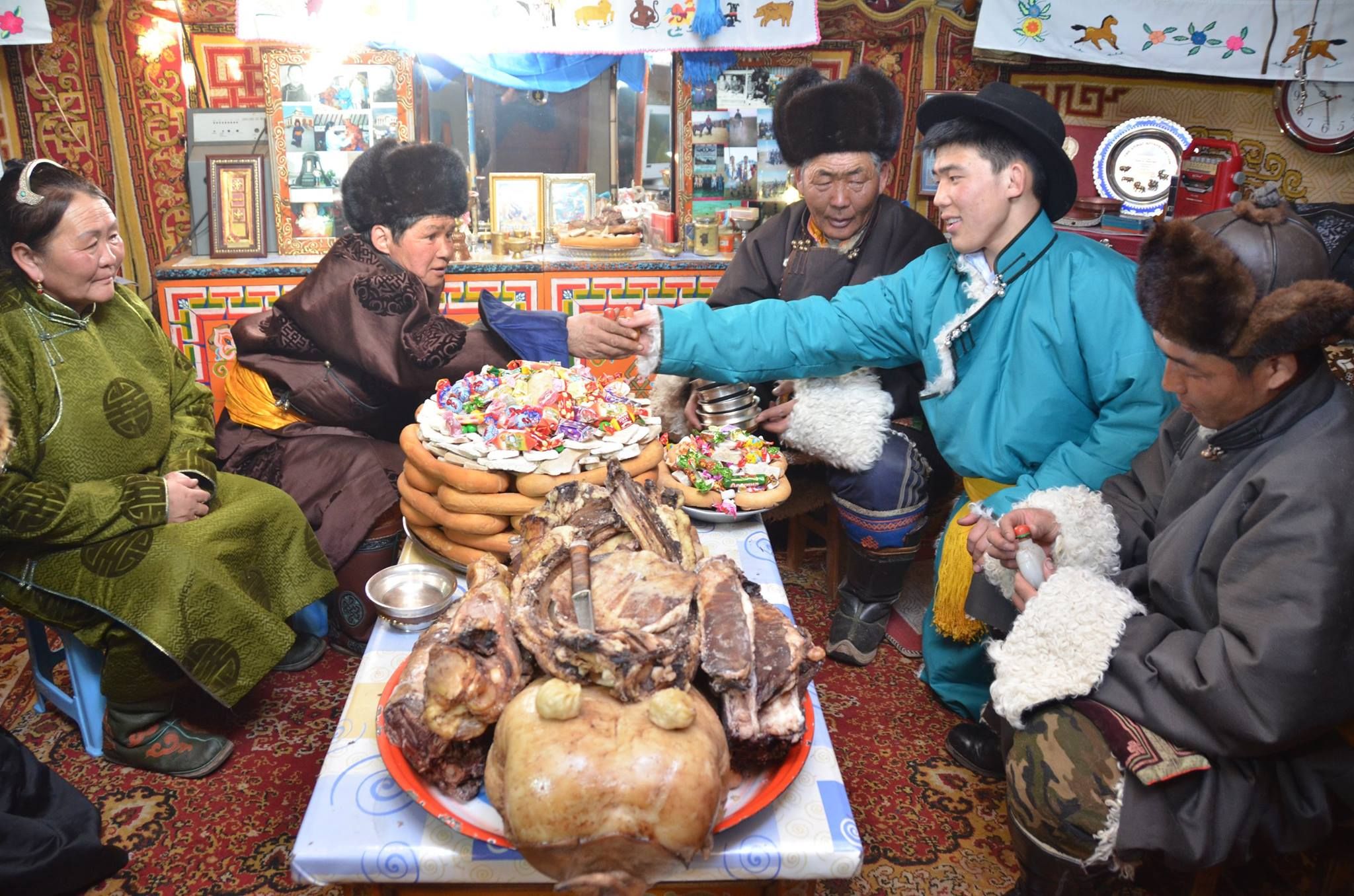
During Tsagaan sar, the clothing and traditional greetings are important. People often dress up in Mongol clothing. When they greet their elders, they grasp by the elbows as a sign of support and respect. They often say holiday-specific phrases and greetings, too. During the greeting ceremony, family members hold long pieces of colored cloth called khadag.
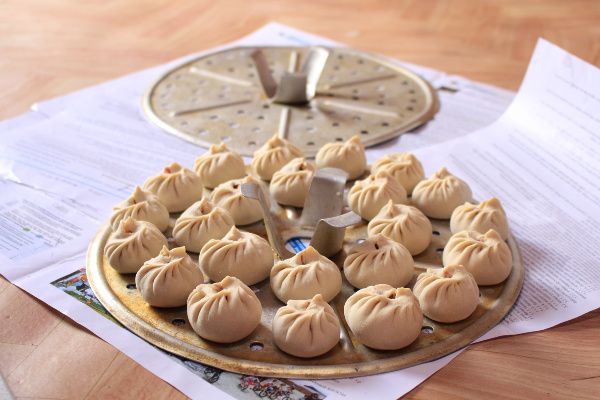
During Tsagaan sar, families feast together. A food often cooked on this holiday is Buuz, which is a side of grilled lamb or beef in pastry. Ul Boov is another dish prepared, they are long flour biscuits. These biscuits are stacked on top of each other to form several layers in a tower, arranged in odd numbers to bring happiness.